For the Love of Birds, Trees & All Wilds: Save Every Roadless Area
This piece appeared first on my Substack, Kingfisher Journey on August 25, 2026–updated version here.
“To find climate refugia, I look for the roadless areas—the glorious blank spots on maps free of roads.”— Marina Richie, Feathered Forest: Aloft with Birds in Ancient Forests
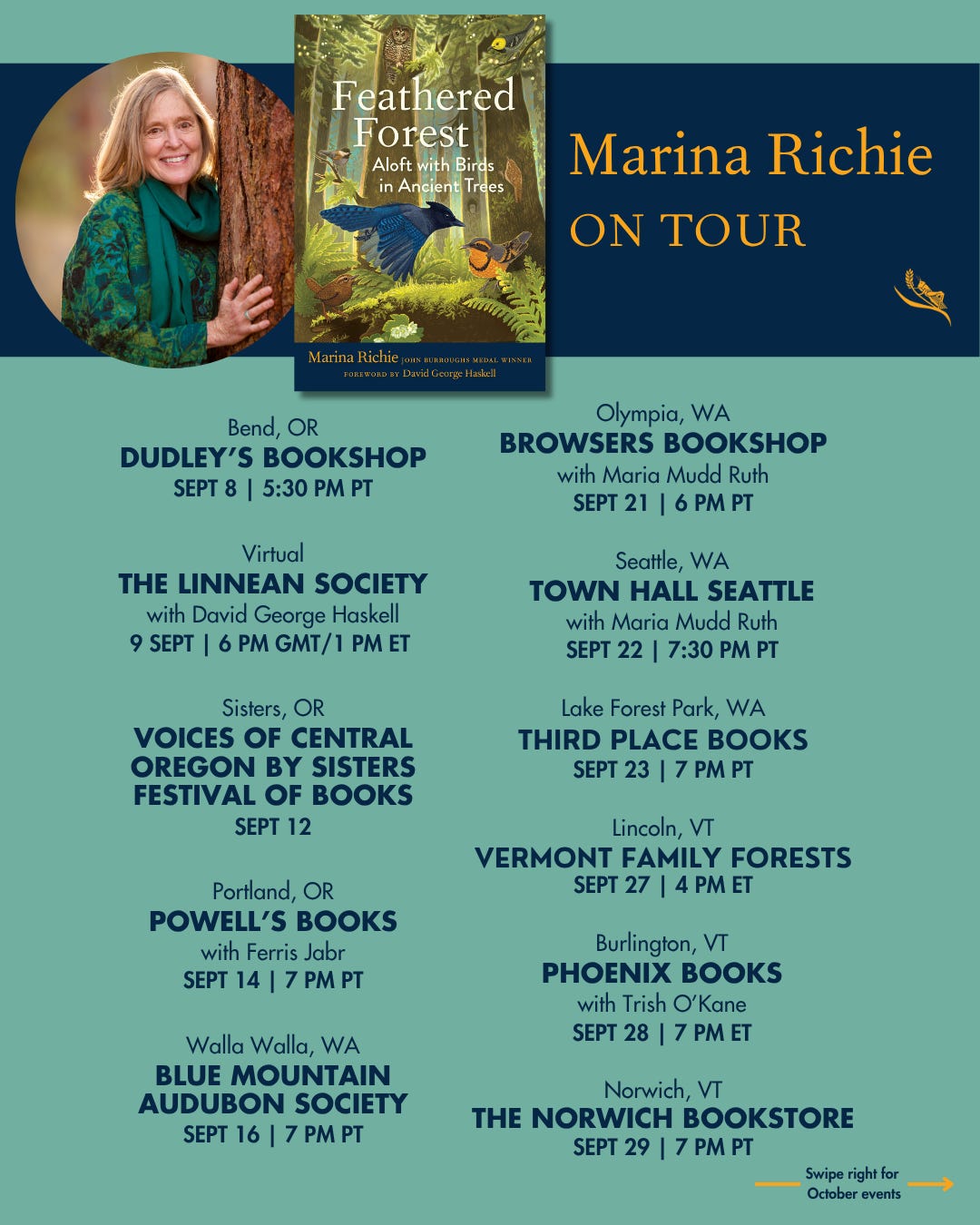
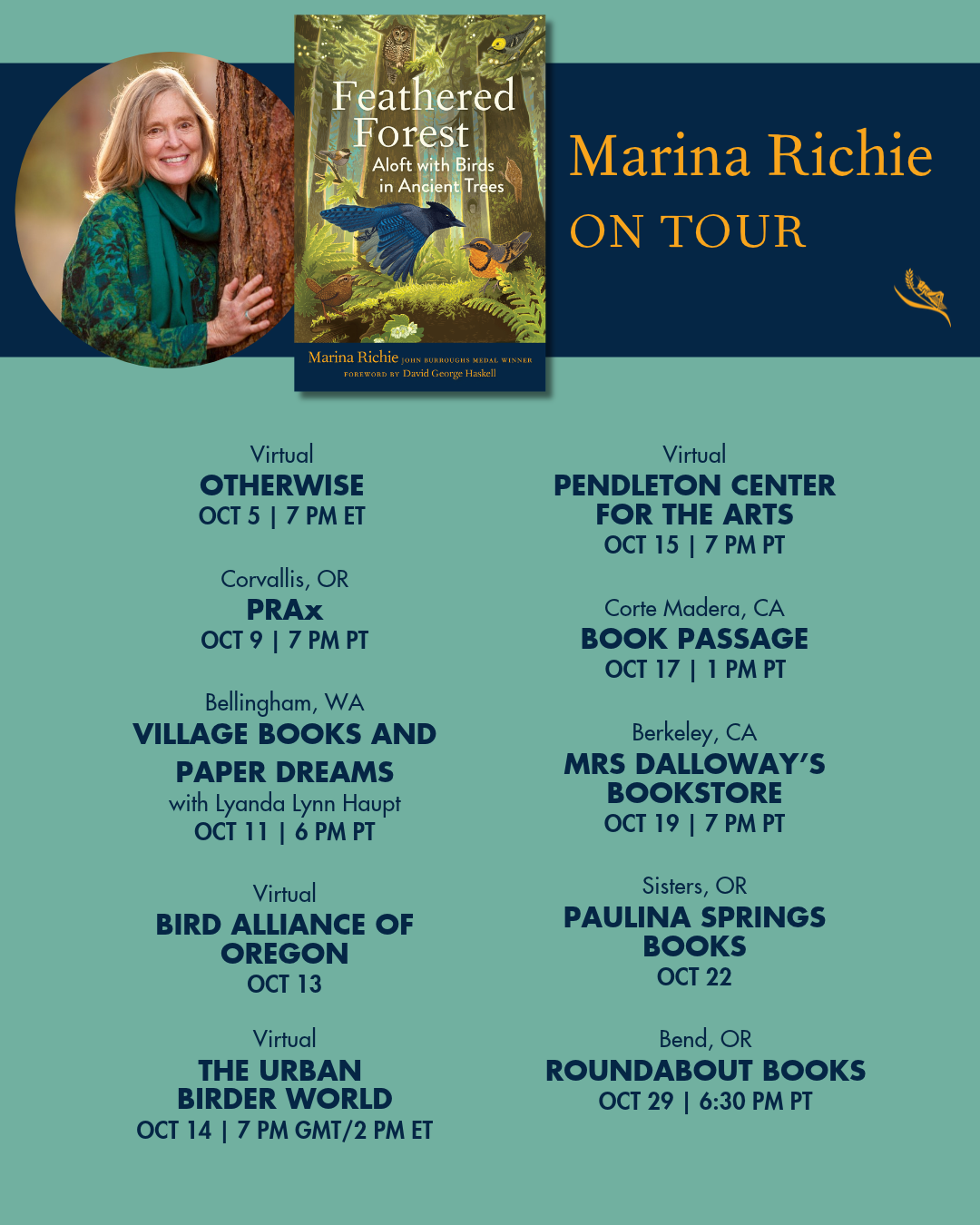
On Tuesday, September 8th, my new book, Feathered Forest, will be on bookshelves and my ambitious tour schedule officially begins. I will read and share my love of birds and wild forests, the way birds guide us upwards into a hidden realm of wondrous ecological relationships. I’ll tell stories from the field of scientists, volunteers, and environmentalists who give me hope for our future and I’ll weave in memoir of growing up in ways relevant to the book’s structure of understory, midstory, and overstory. I’ll define what makes a forest “feathered.”
What I didn’t know when writing the book is that the great unraveling of our precious public lands would be happening at a pace and scale meant to overwhelm all opposition. So now I have a platform and I will use it.
Here’s one “take action” of the many groups allied for protecting roadless areas before a September 21st deadline.
Portals Connect Us to Roadless Wilds We Must Protect
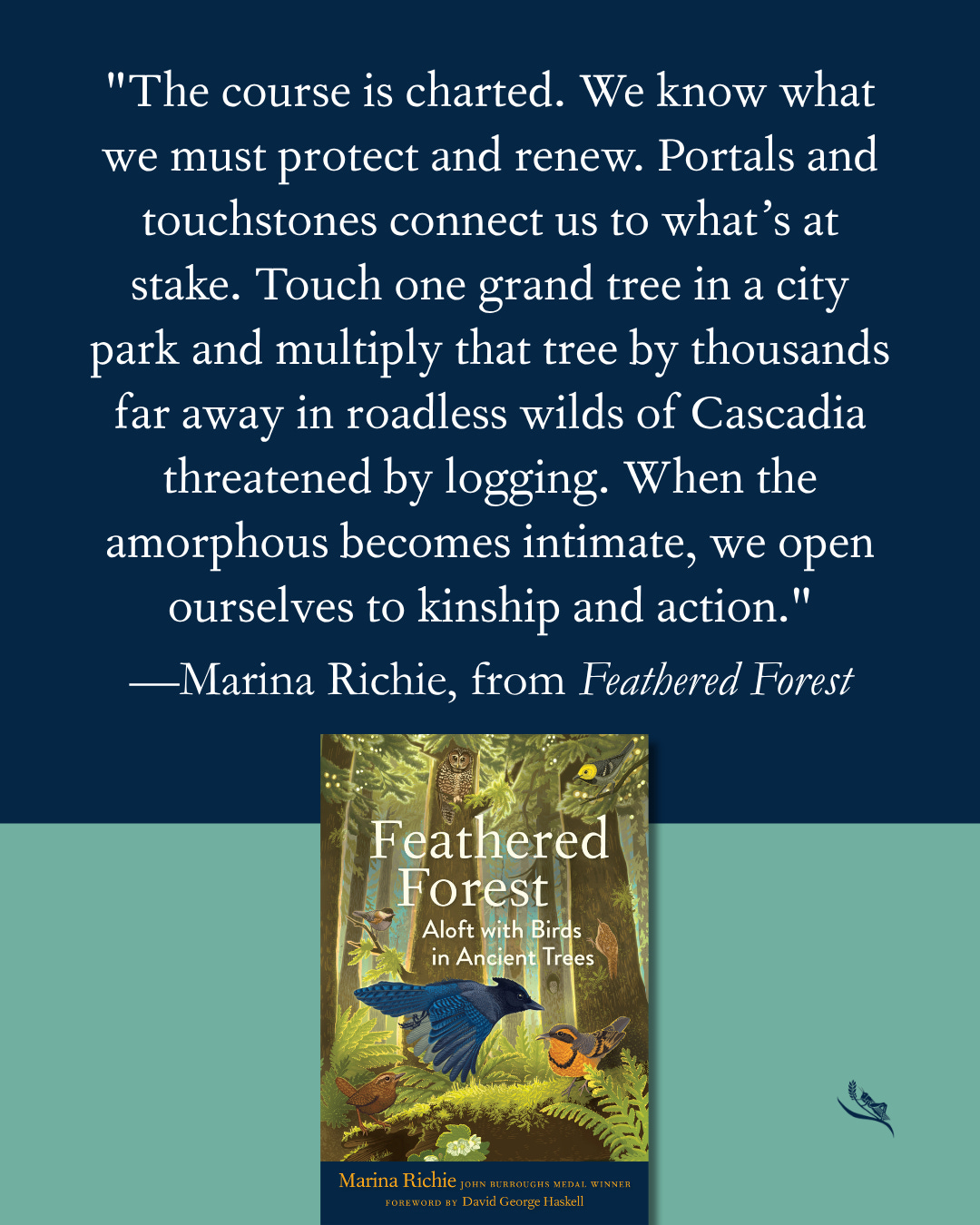
In my new book, I make the case that our future depends on protecting our last wild forests, especially roadless areas. I also write of portals as openings to roadless wilds that can be far away.
It’s human nature to be most connected to an individual tree targeted to be cut down or a local plot of open space slated for development. We fall in love with the birds in our backyard and want to protect them.
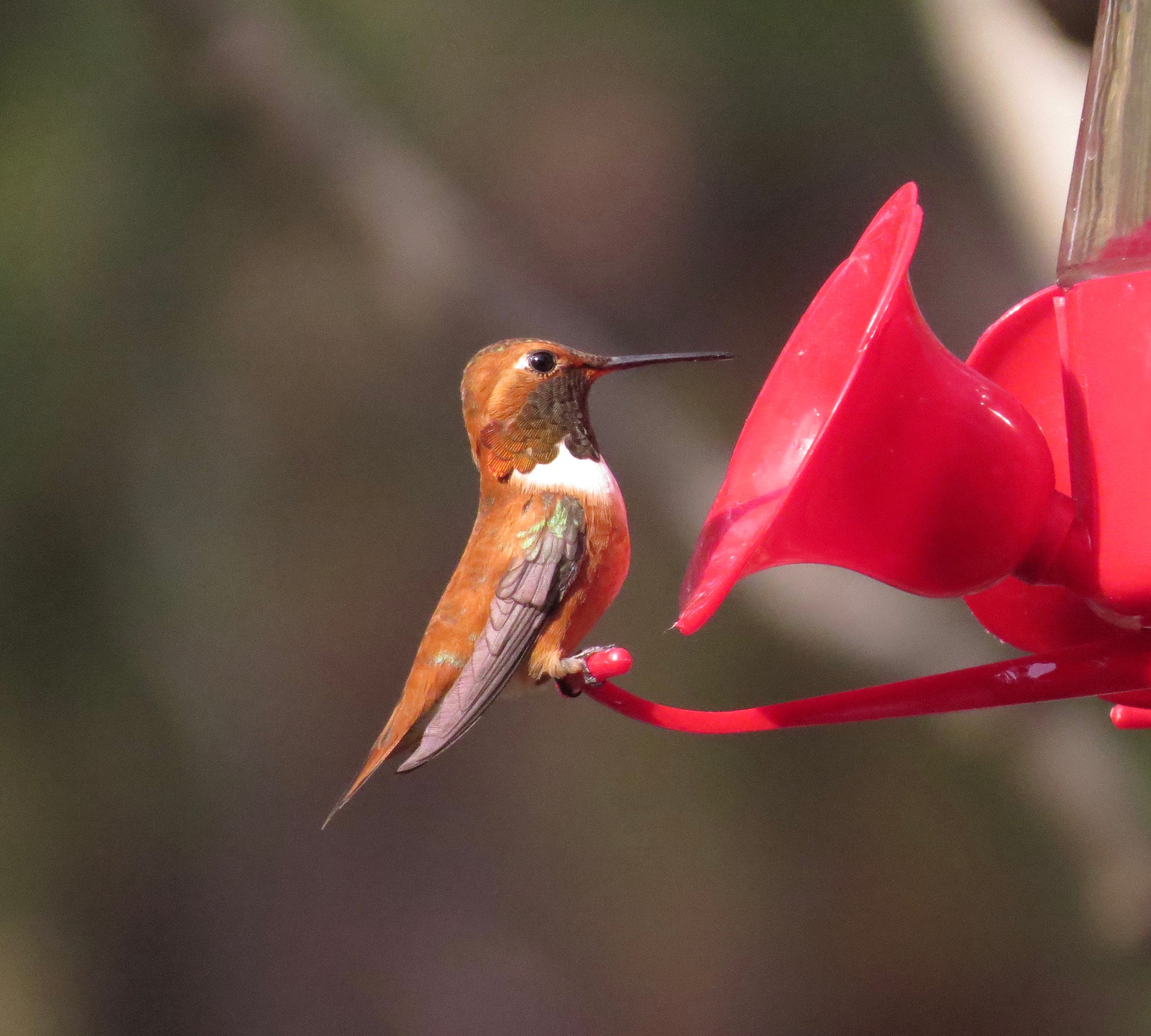
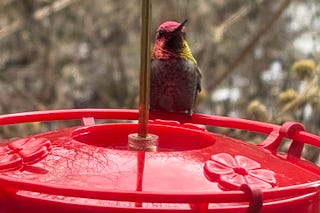
Many of us are planting native species supporting an abundance of insects that in turn are feeding chicks. However, when hummingbirds we’ve watched all summer at feeders and flowers fly off in the fall to migrate thousands of miles, they link us to the greater whole of which we are one small part. It’s then up to us to take that flight of caring for what’s far beyond our home perimeters.
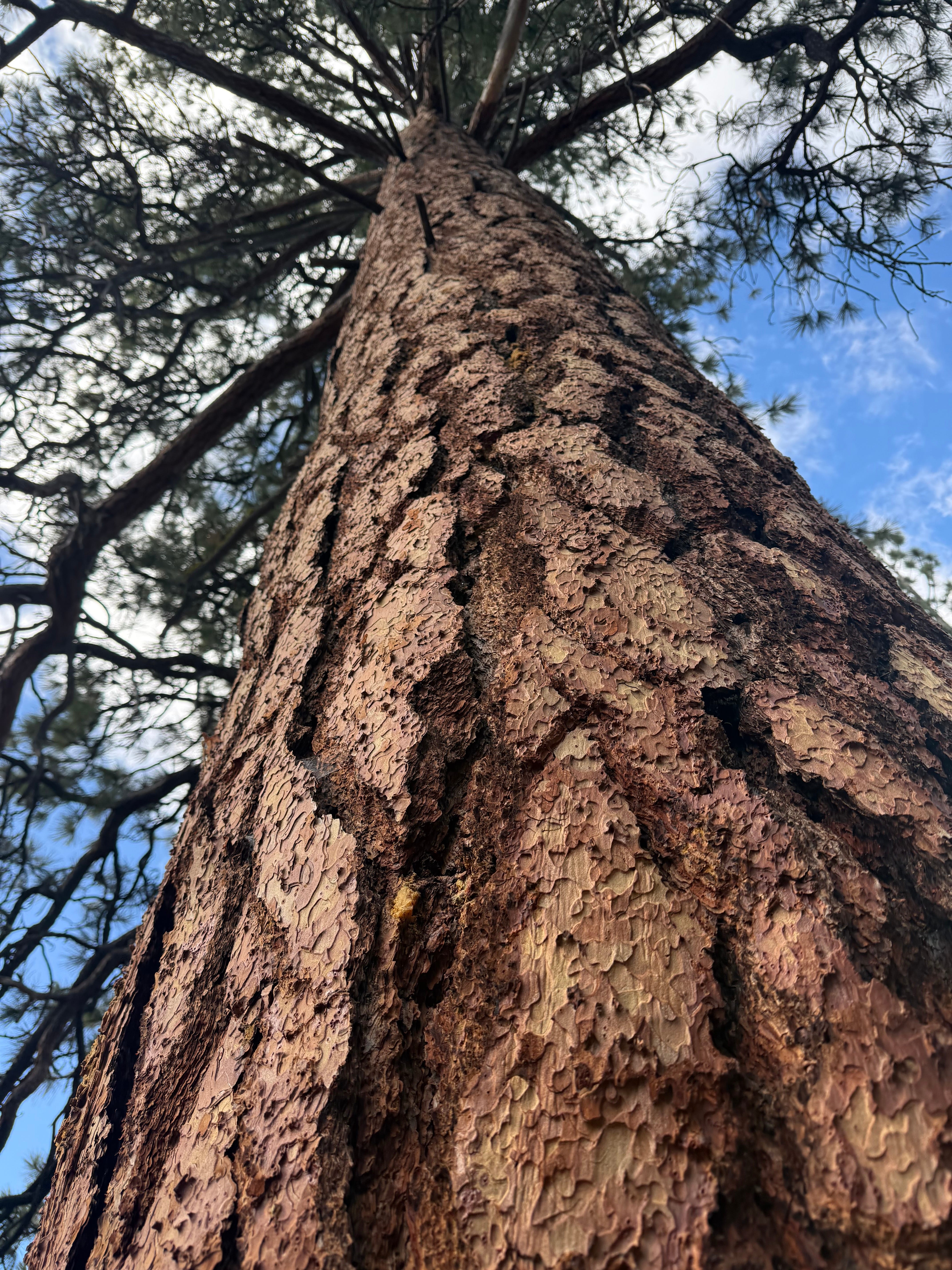
The Power of Naming
Taking action locally is important. Scaling up to then also speak up for the wilds beyond our small sphere is the natural next step. When we do know the roadless areas, it’s important to call them by their names, to help others see each one as exquisite as a favorite national park.
Where I live in Bend, Oregon, I name the threatened roadless wilds of the nearby Deschutes National Forest— many roadless areas around Mount Bachelor, including Tumalo Mountain, forests surrounding Elk and Hosmer Lakes, and wild areas buffering the Three Sisters Wilderness. Others on this forest alone include roadless wilds around Paulina and East lake and the Bridge Creek watershed, supplying most of Bend’s drinking water.
Name what we know and love. There’s power in naming that I reflect upon in my book through another thread—one of honoring the wisdom of author Ursula K. Le Guin and a special connection with her from long ago.
Go Out in the Wilds and Be Amazed
There’s nothing like delving into wild places with naturalists, birders, and other guides who can open our eyes to breathtaking diversity. When we experience that, we know wonder that can never be replicated by reading—although as an author I do strive to take people virtually to the complex world of ancient forests and on the wings of birds.
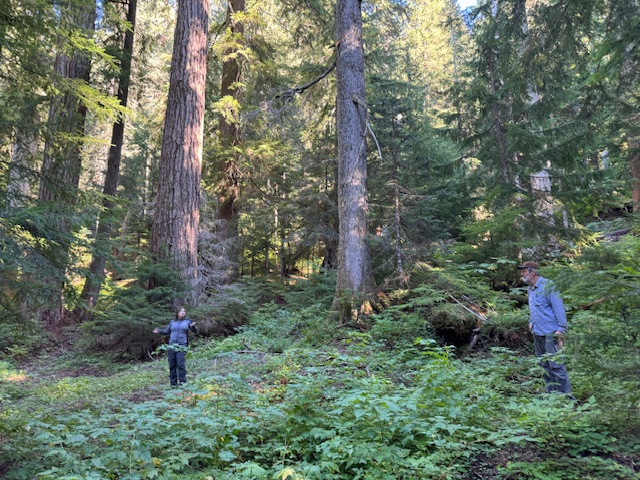
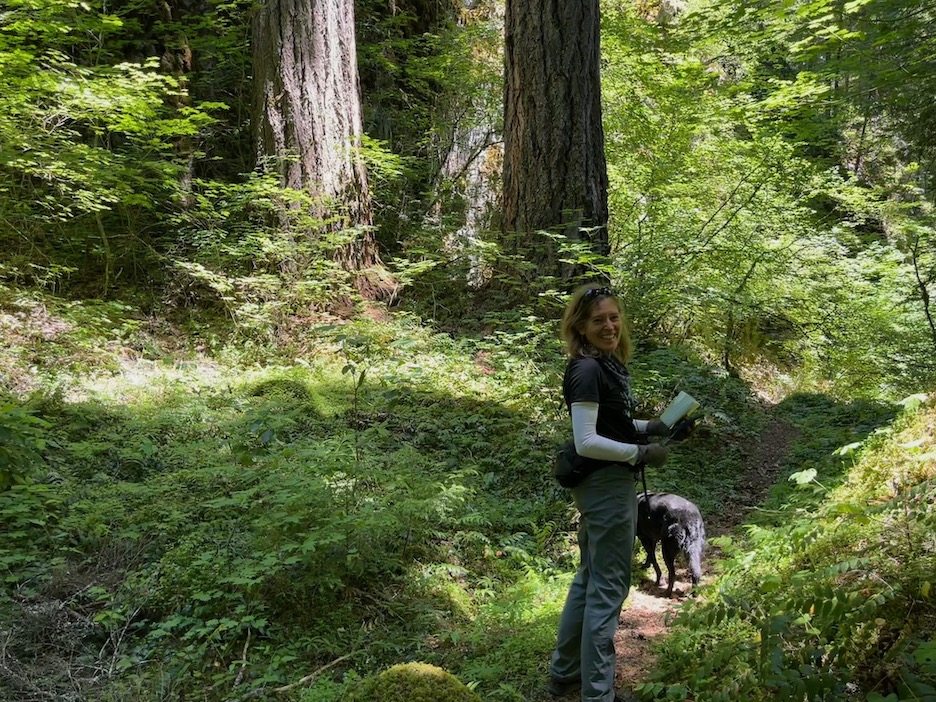
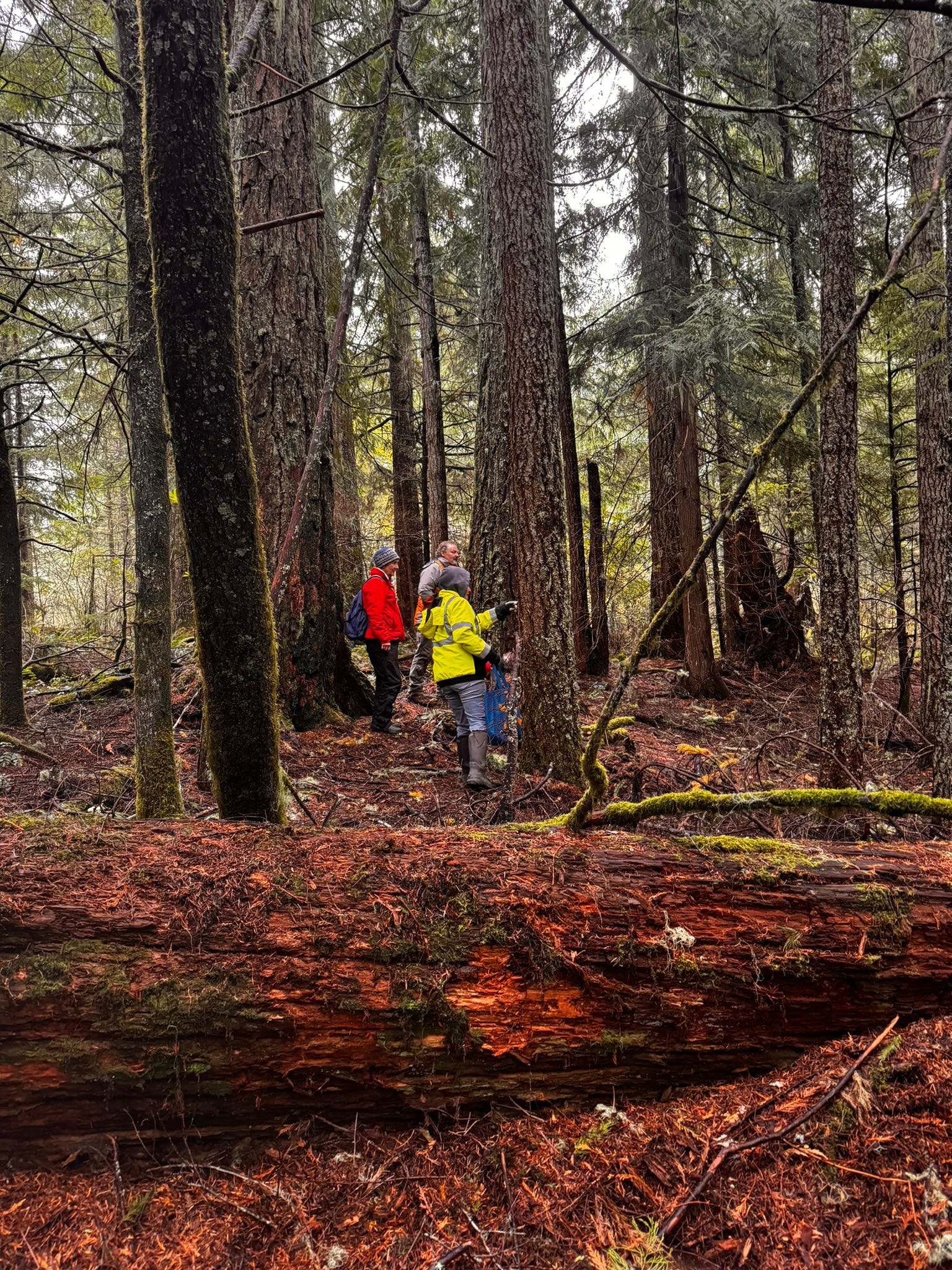
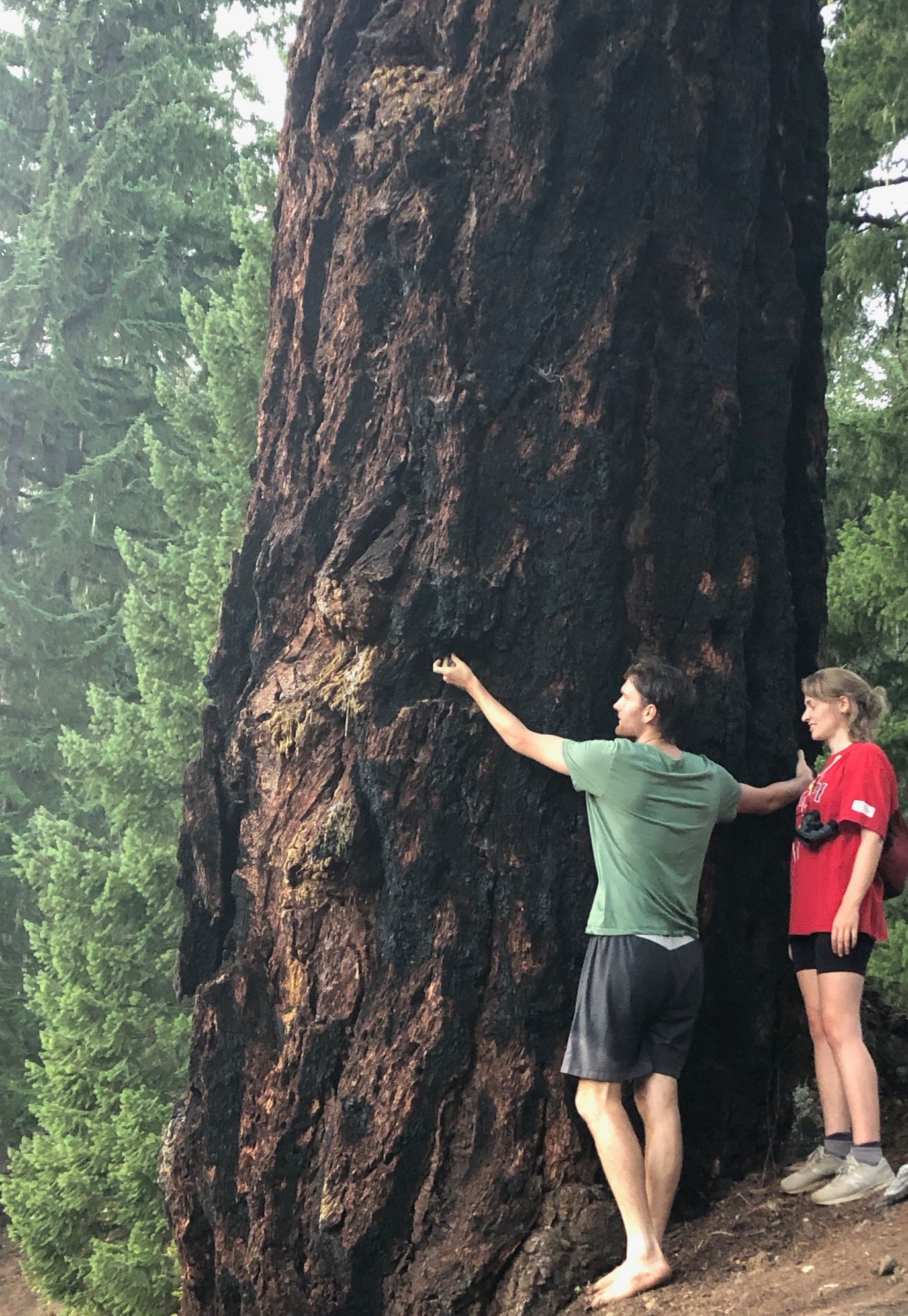
I took the photo below in a roadless area linked to Hardesty Mountain roadless area not far from Eugene, Oregon, from a field trip with Charles LeFevre and his truffle-hunting dogs who sniffed out eleven species of truffles in a quarter mile in this old-growth or ancient forest. Log this forest and all those delicate and essential relationships will be lost. (And yes I have a chapter on truffles in the book from my outing with Charles and the Eugene Natural History Society).
Climate Refugia —a Lifeline to the Future
In my book, I write often of climate refugia—a term referring to the places with the best chance of surviving the extremes of the climate crisis. Birds lead us to what they need to thrive—wild areas that like a feathered bird insulate and buffer from the extreme weather of climate change.
We often take for granted what we do not see right in front of us. The wildest places remaining on Earth are what’s keeping our climate from spiraling completely out of control with all the human-induced burning of fossil fuels and wood choking our atmosphere with excess carbon, which in turn causes global warming. Roadless areas are havens for biodiversity that are lifelines for all survival in ways we are still learning. And of course they are glorious.
Therefore, let us all speak up for the roadless wilds today. Please pay attention to all the action alerts coming your way and take a few minutes to personalize and send. And you can do more—write letters to the editor, opinion pieces, and contact Congressional representatives asking them to speak up and put forward the Roadless Area Conservation Act. Remember, we only have until September 21st.
Thank you. I hope to see you on my upcoming book tour, or you can listen or watch one of my virtual events.
For the birds and the wilds—Marina
“ Save every wild feathered forest left, every roadless area, every big tree, old tree, dead tree, and all the secret relationships that birds can divulge if we attend. Renew and heal what we have harmed. As humans have heated up the world, the very Earth is responding and striving to keep our planet stable. The forests are taking up 30 percent of the additional carbon dioxide we’ve added. The largest trees are capturing and storing the most. To cut them down is to be cavalier with our future.”— Marina Richie, Feathered Forest
Kingfisher Journey- Marina Richie is a reader-supported publication. To receive new posts and support my work, consider becoming a free or paid subscriber.
Discussion about this post
Earthbound with Susan J Tweit7d
Thank you, Marina, for the inspiration of Feathered Forest, and for this call to action on behalf of roadless areas! It’s important to note too, that some of the largest roadless areas are not forests: they are sagebrush shrublands, alpine tundra, and even canyons. And they all deserve our stewardship, our respect, and protection. They are refugia for our hearts and spirits, as you point out, as well as the refugia for the wonderfully diverse beings with whom we share this planet. May Feathered Forest and you reach many readers, and may you finish your tour inspired.
Jan 28, 2025•Marina Richie
18
4
1

Crabtree Valley- Is Nothing Sacred?
Deadline is today–March 23rd–Take Action to Say NO to BLM Logging Last Old-Growth Forests!
Mar 16•Marina Richie
7
4
3
Timeless Hiking on Great Glen Way
Scottish Highlands Whisper Ancient Stories
Aug 6•Marina Richie
13
2
My Winter Hummingbird Obsession
In a Quest to Keep One Wild Bird Alive, I find Unexpected Resilience
Jan 30•Marina Richie
11
3
3
In life, love, nature. & passing the 1.25% for Wildlife Bill in Oregon
Feb 17•Marina Richie
11
5
Dec 31, 2025•Marina Richie
11
7
2
Insights from The Salt Stones by Helen Whybrow
Nov 22, 2025•Marina Richie
8
6
2
Why I Turn to Birds for Uplift
Jun 23•Marina Richie
9
2
5
‘We will be fierce together as we continue to protect all of it!’
Feb 18, 2025•Marina Richie
8
4
2

Two Wilson’s Warblers Strike a Window
May 8•Marina Richie
7
10
2
© 2026 Marina Richie · Privacy ∙ Terms ∙ Collection notice
Start your SubstackGet the app
Substack is the home for great culture