Driving Home in the Arctic Freeze, I Hit a Songbird
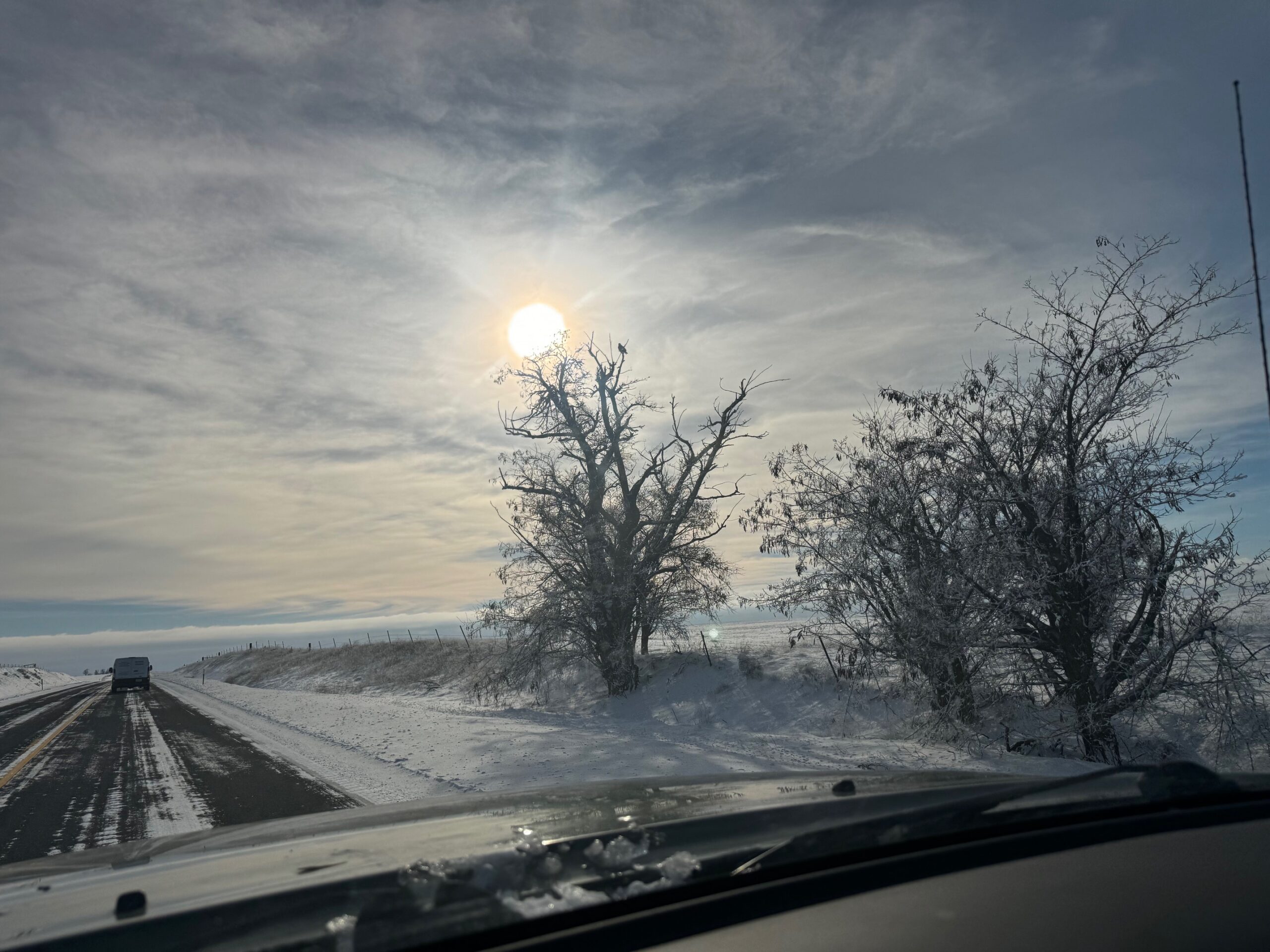
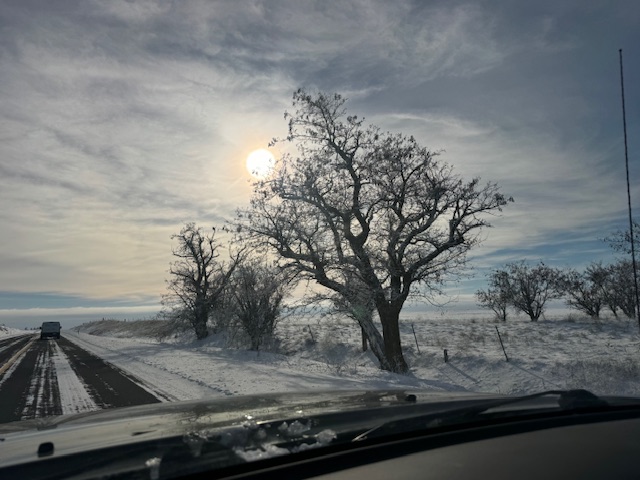
Driving well below the speed limit, I took a day and a half to cover the 600 miles between my former community of Missoula, Montana, to my home in Bend, Oregon. I reveled in the turtle speed relative to the hurtling trucks and the few cars out in the bitter Arctic blast. Going slower meant I could attend to ice on bridges, packed snow on the mountain passes, and other drivers.
What a joy to be unhurried in my passage, even as my environmentalist mind reprimanded my double standard of fighting fossil fuels while filling up my tank. I took some comfort in the improved gas mileage from slowing down and knowing I could be more careful in avoiding animals unlucky enough to venture onto the highway.
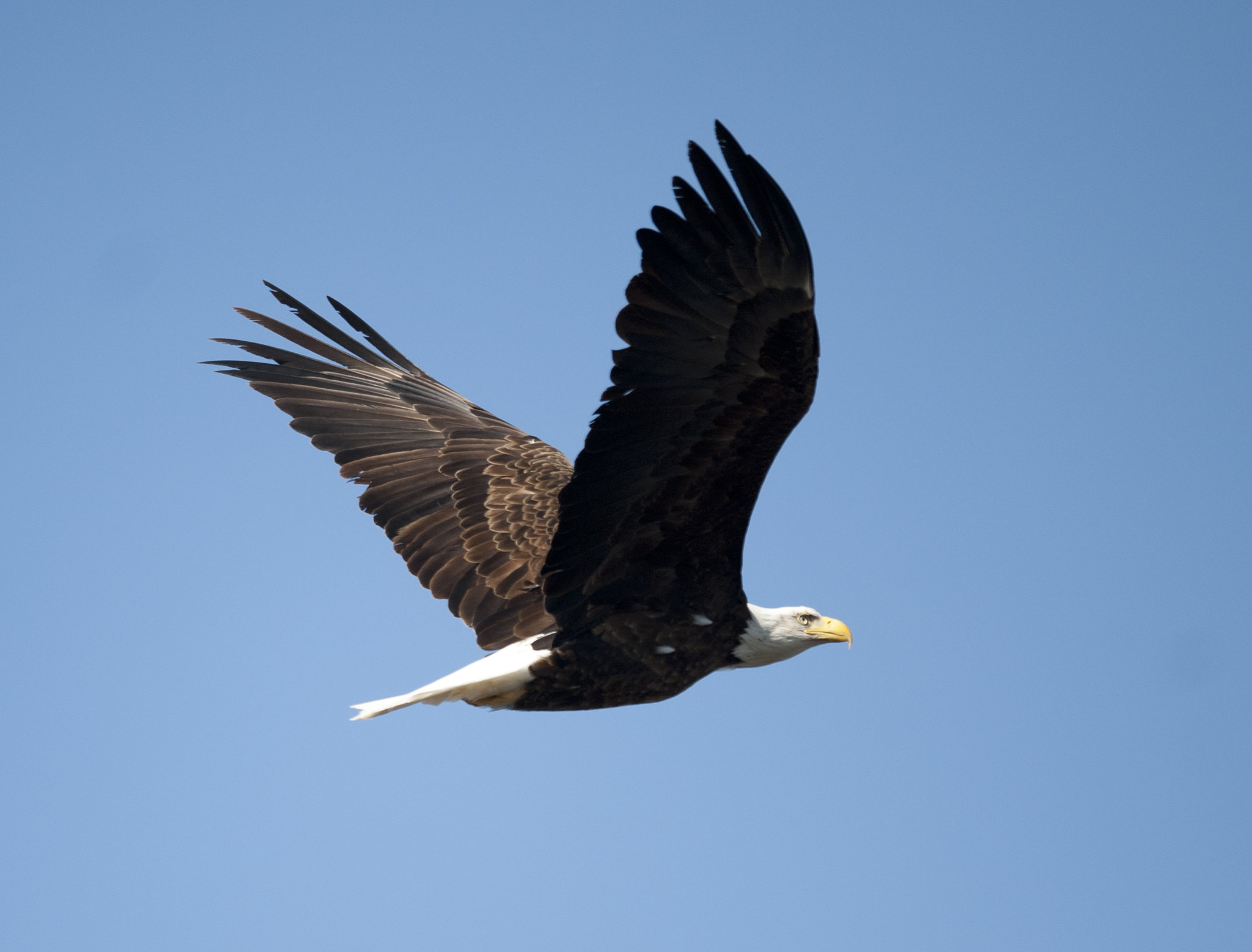
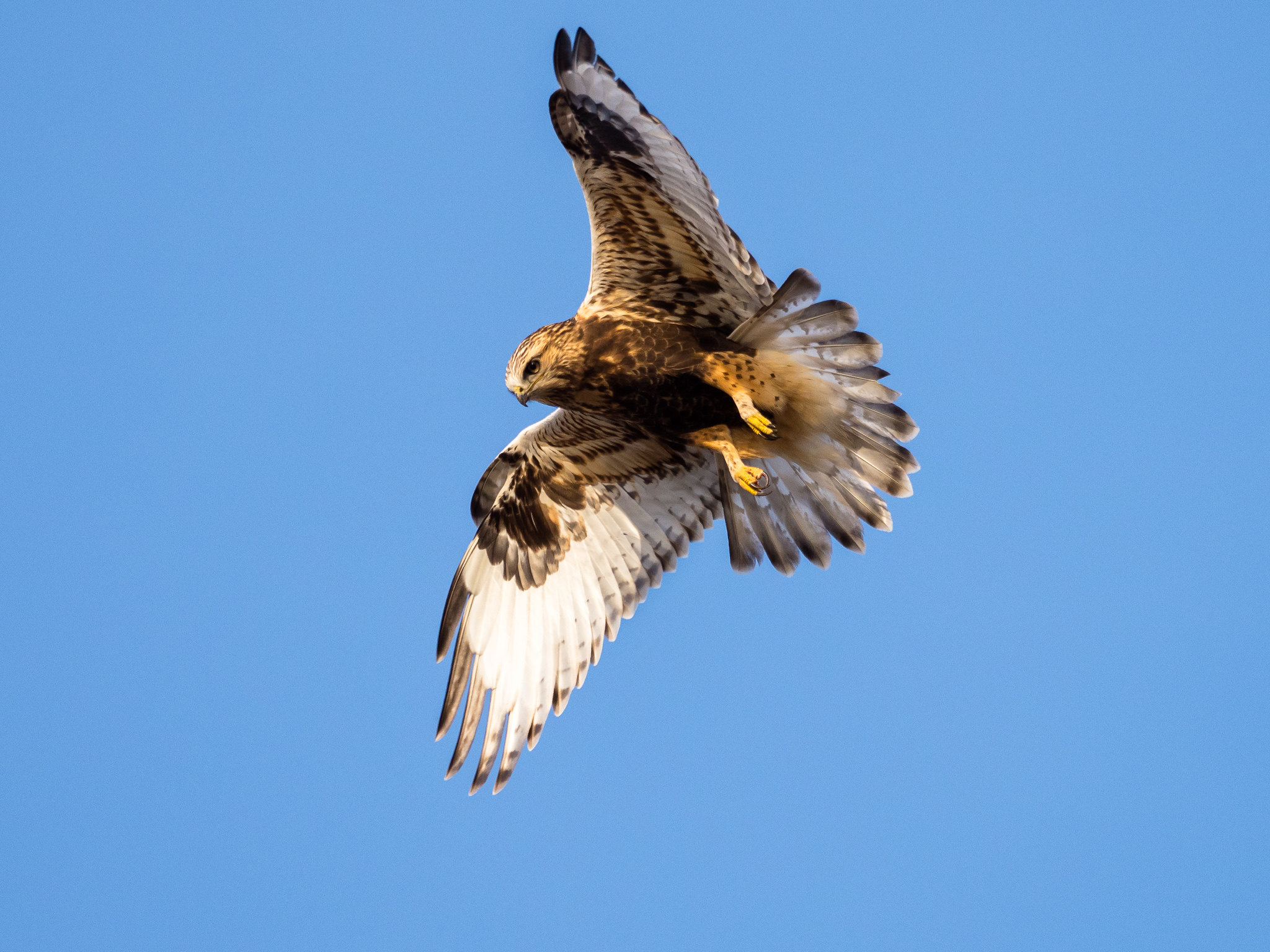
Looking out from the warmth of my small pickup truck cab, I noted the slow flaps of a Bald Eagle headed toward the Clark Fork River muffled in an icy shroud. A Rough-legged Hawk (denizen of the far north come south for the winter) perched on a telephone pole. Ravens exulted in the frigid air–black wings sweeping crystals into vortices. It was minus eight Fahrenheit when I left Missoula this past Sunday, far more benign than minus 22 the morning before.
Birds fluffed their feathers into airy insulated cloaks. In Missoula, frost tipped the lush thick winter pelage of Rocky Mountain elk on Mt Jumbo. When I had walked outside bundled in layers, my eyelashes froze. I breathed through a scarf and felt the relentless cold seep in with every step.
On day two of my homeward drive as I steered south of the Columbia River on Highway 97 toward Bend listening to the engrossing book Better Living Through Birding, Notes from a Black Man in the Natural World, by Christian Cooper (narrated by the author), I was feeling especially tender toward birds. The audiobook features songs at the start of each chapter–twitters of Chimney Swifts and the heart-quickening ephemeral notes of the author’s favorite, the Blackburnian Warbler.
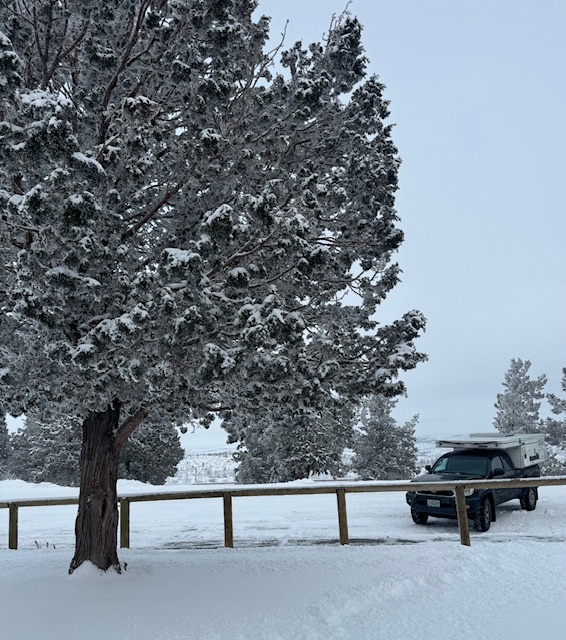
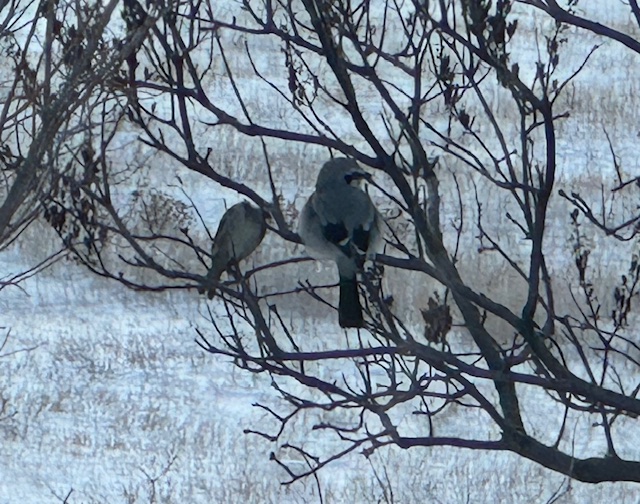
Here, snow-covered sagebrush interspersed with wheat fields and frosty lone trees. I’d noted small flocks of sparrows too hard for me to identify even at a slower speed. I was sure Christian Cooper would know them by flight pattern and silhouette. If not, he’d pull over and sleuth out their species no matter what temperature. I considered, but did not see a pullout. The songbirds were gathering at the roadside to peck at gravel–ingesting pebbles to aid digestion. Sometimes, they flew into the hazy sky in a swirl of winged stones.
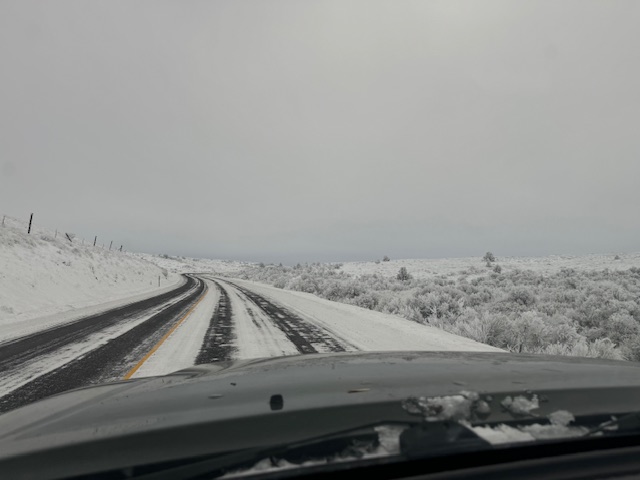
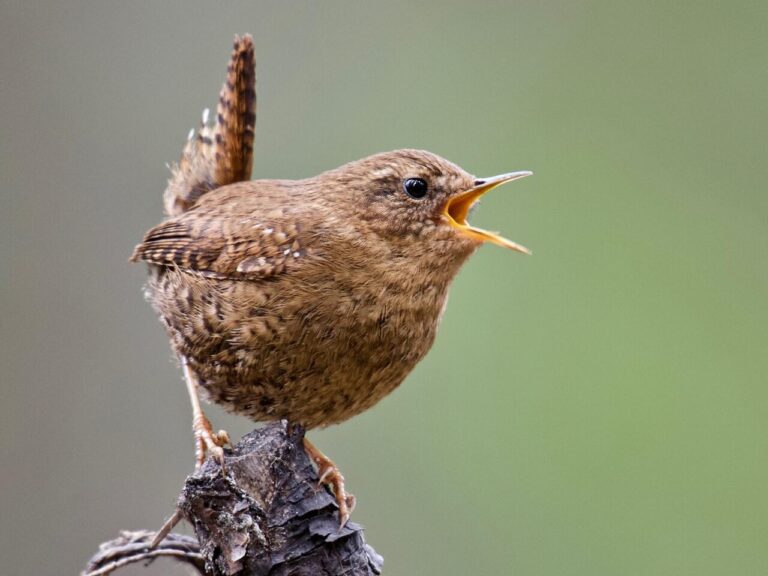
A flock of about seven burst into the air and flurried right in front of the truck. One bird struck my windshield. I cringed, ducked instinctively, and held the steering wheel tight without a swerve. Thud! Bounce! Gone. Only a single ashy gray downy feather tinged in cinnamon clung for seconds to the glass. Cursing myself for not anticipating and braking (safely), I realized that in the cold, birds likely fly slower. Blinking away tears, I vowed to do better. Within five minutes I had my chance.
A Rough-legged Hawk veered right toward the truck’s passenger side and this time I did brake–not hard, but enough. The hawk was fine. I breathed a little easier, yet uneasy.
Our gas-guzzling driving habits are not only killing life on our planet, but also directly killing wildlife–as all of us know from dead animals on and alongside roads. Have we become numb to the dying? Do we excuse ourselves too easily? One solution is to be part of the activism that has led to more overpasses and underpasses for safe wildlife crossings. All of us should support measures to help wildlife navigate our deadly roads. On my list of books to read on this subject is Ben Goldfarb’s 2023 book: Crossings, How Road Ecology is Shaping the Future of Our Planet.
I do not regret the trip. To spend two weeks in Missoula with my son Ian and dear friends and to re-immerse in Rattlesnake Creek of kingfishers renewed my spirit and reconnected me to a precious pocket within a vast Northern Rockies ecosystem.
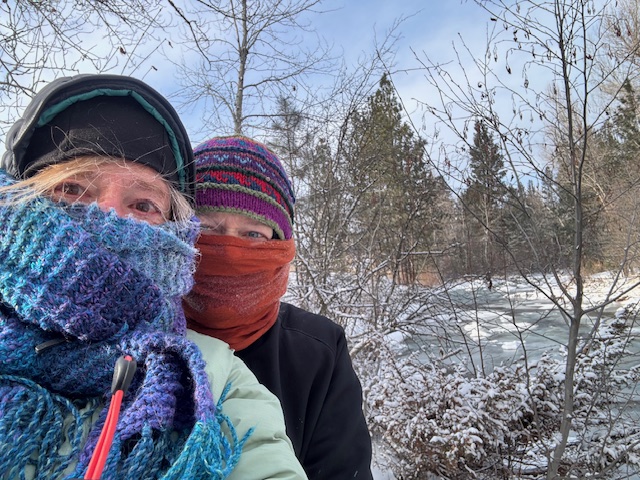
I did not fly on a plane. I saved fuel with conservative driving. I camped on the way over. But there it is. Each time I stopped to fill up gas, I winced. At least at home, we have a Prius and I hope to switch to an electric vehicle. I want to engage in more ethical ways of travel.
I remember an interview with the great late poet W.S. Merwin who articulated how he grappled with living each day celebrating the beauty of nature while participating in our human destructive ways. He was not at ease either, yet he lived more simply than most and rewilded his Hawaii home ground. His poetry on behalf of the earth could be fierce.
For what else will shake us awake? From Merwin’s “For a Coming Extinction” the first lines are chilling: “Gray whale, Now That we are sending you to The End…”
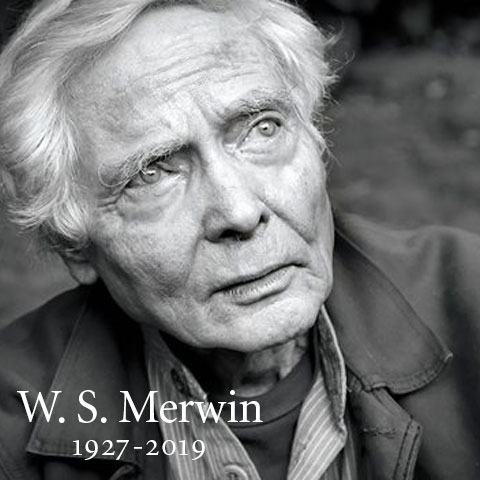
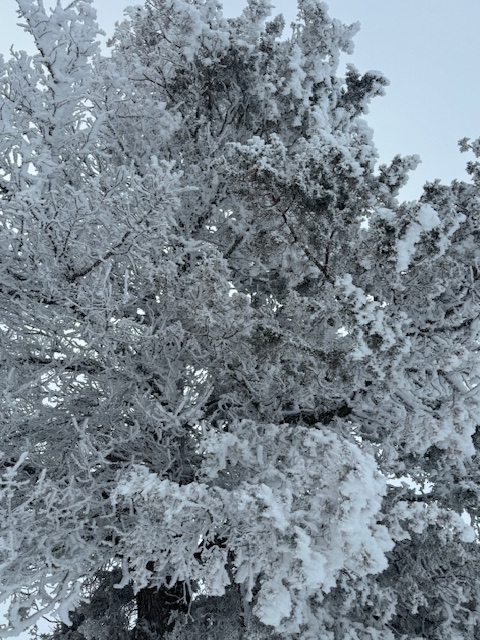
I’m perusing his poems this morning as I write with winds fleecing the pines of their snow. On the Merlin Conservancy website, I come upon “Rain Light.” Yes. This one. I look up an interview with Merwin about the poem. He begins by saying that living in this time where the world as we know it is dissolving around us and all is endangered, we have a choice to either face our moment or groan and dread it. He chose the former, while keeping us buoyed on his poetic updrafts like soaring raptors– reminding us of the gentle touch of dawn rain, the entwining of life and death in a cycle, and a way of entering each day fresh-faced and open to beauty.
On this day with the sadness of the sparrow’s life cut short still heavy on my conscience, I offer Merwin’s poem and a reminder of being present and connected to the other-than-human world. Out my window now as rain falls on deep snow in our yard, Dark-eyed Juncos peck seeds on the shoveled path When they fly, their dark tails flash white outer feathers, a distraction display to baffle hungry Cooper’s Hawks and Sharp-Shinned Hawks. They live exposed to the elements, alert, and bright-eyed. I wonder. Do they “wake without a question?” They cannot know what we have wrought with the climate and biodiversity crisis upon us. It is our time to act–strengthened by the community of so many like-minded people who wake each day with gratitude and wonder.
RAIN LIGHT
All day the stars watch from long ago
my mother said I am going now
when you are alone you will be all right
whether or not you know you will know
look at the old house in the dawn rain
all the flowers are forms of water
the sun reminds them through a white cloud
touches the patchwork spread on the hill
the washed colors of the afterlife
that lived there long before you were born
see how they wake without a question
even though the whole world is burning
— W.S. Merwin, from his Pulitzer-Prize winning book The Shadow of Sirius (Copper Canyon Press, 2008).
❤️
I often strugg
Beautiful words and sentiment. Thank you.
Thank you for another lovely and contemplative post. Daily, our family cringes at all our harmful actions and inactions as we imperfectly meet our alleged needs. And, we do not let the shudder, of not doing enough, to stop us trying harder to help, reduce, reuse, educate and mostly, not use at all. Slowly, we tip the balance in the right direction. Thank you for being honest alongside all of us who are trying to stay positive about trying!
Thank you for your offering of how we may collectively “tip the balance in the right direction.” Love that image. And it makes me think of the adage by Margaret Mead, “Never doubt that a small group of thoughtful, committed citizens can change the world; indeed, it’s the only thing that ever has.”
I hate hitting birds (or any other animal) while driving. It is as if one feels the “poof” of a life leaving and there is a void behind. Thank you for this lovely essay on your drive. Also, I do not miss Montana’s cold temps!
Yes–your image is just how it feels. Yesterday, I listened to the latest episode of the podcast “Your Bird Story” –about a woman artist who applies a Japanese printmaking technique called Gyokatu to commemorate birds and animals killed on the road—another way of awareness. I would have liked to give an offering of apology and honoring to that songbird….
Thank you for the drive 🙂 There are more bird deaths from vehicle impacts by bird or vehicle that we know but pales in comparison to the habitat losses. Whether from freeways, truck stops, sub-divisions and more.
We have a real conundrum on our hands with our journey to energy production for consumption of electricity for vehicles, heating our homes or running our computers.
Wind Farms have their foot print impact and more on birds, Solar is a favorite of mine but it still takes away habitat. I was out and about in the area south of the freeway between Boise and Mountain Home (Orchard, ID). There are some existing solar farms in the area and a very large one under construction and it is already displacing winter habitat for Horned Larks, Dark-eyed Junco, Meadowlarks, Gray Partridge and more. No impact on Greater Sage Grouse since it is long gone from the Cheat Grass fire regime of the last several decades.
So far no free lunch … do we do more in-stream no dam turbines, ocean current, better fpr use of hydrogen fuel cells (now most hydrogen takes a lot of energy to crack out of Natural Gas etc.) beyond my limited technical comprehension.
What we can not do is keep on fouling our and the birds nests without a thought of how can we do it differently.
This account is achingly beautiful. Thank you for introducing me to W. S. Merwin.
Thank you. I do feel the ache still. Sigh. Here is a poem by W.S. Merwin about a bird–I think you will like it: https://merwinconservancy.org/2016/01/poem-of-the-week-unknown-bird/